
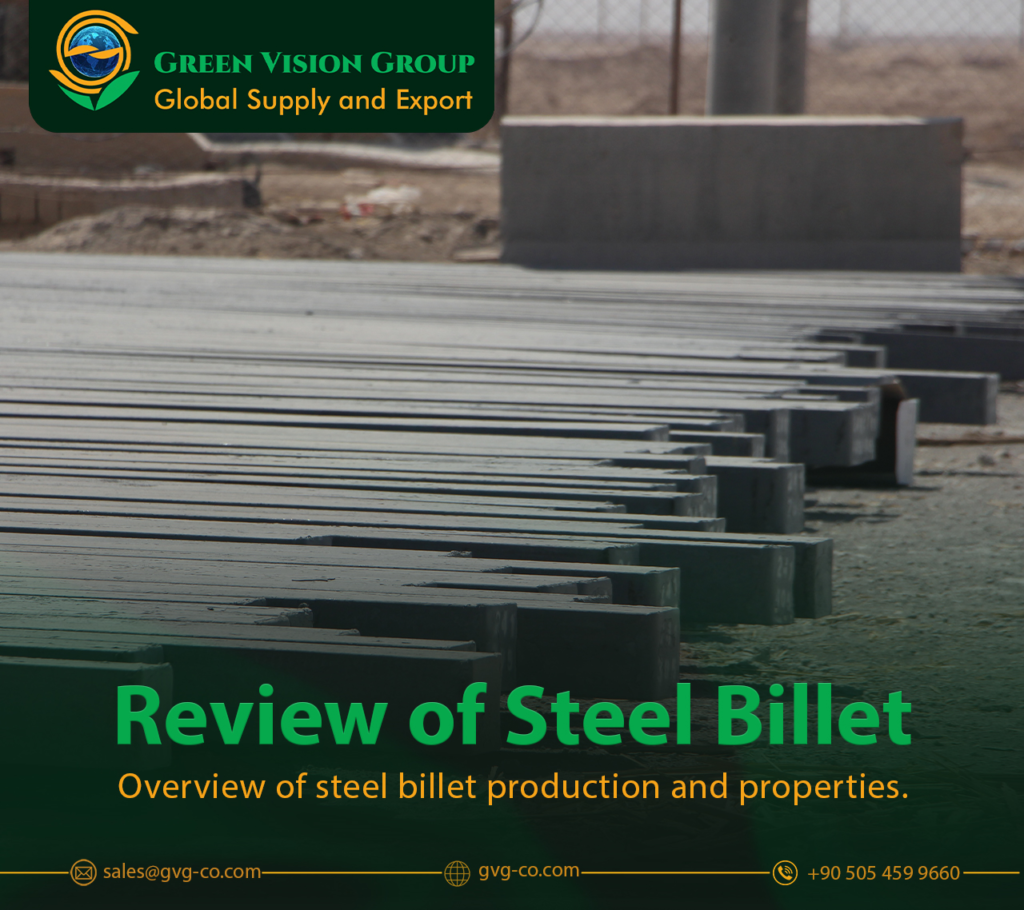
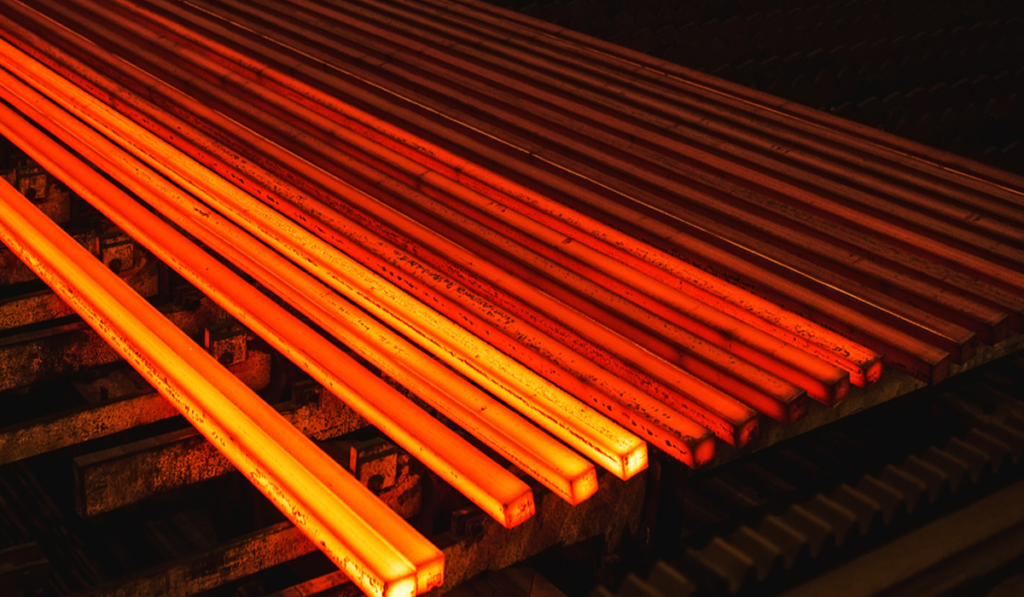
Steel Billets are semi-finished steel products commonly used as a raw material in the production of diverse steel-based items. They are typically shaped into squares, rectangles, or rounds, with cross-sectional dimensions ranging from 40 mm to 150 mm. These versatile products serve predominantly in the manufacturing of long steel items such as rebar, wire rods, and structural profiles. The production of billets involves either continuous casting or ingot casting processes. In both methods, molten steel is poured into molds and solidified into predefined shapes. However, continuous casting is the preferred technique due to its ability to deliver higher-quality billets with greater consistency and fewer impurities. A notable feature of billets is their homogeneous composition, which makes them highly suitable for further processing in rolling mills. Depending on their intended use, billets can be produced from carbon steel, alloy steel, or stainless steel, each offering specific mechanical properties such as tensile strength, ductility, and hardness. In the steel industry, billets hold a significant role as the foundational material for creating numerous end products. Their quality and technical specifications are critical in determining the performance of finished goods utilized across sectors like construction, automotive manufacturing, infrastructure development, and more.
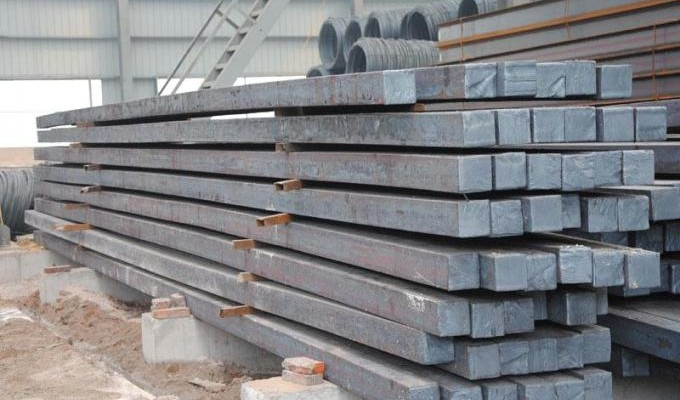
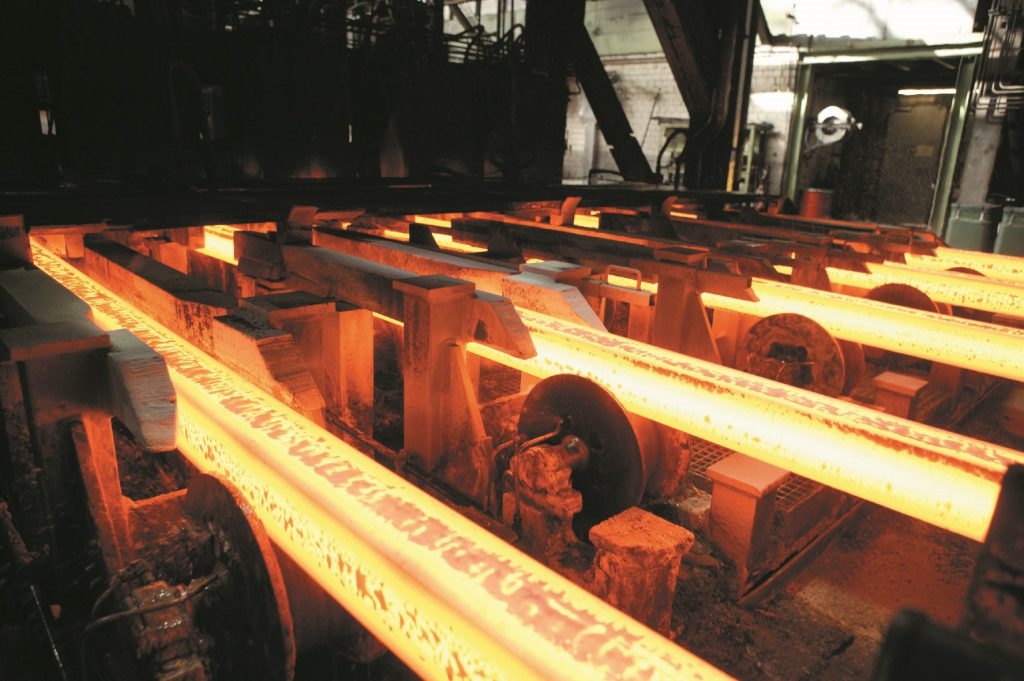
The production of billets begins with the careful selection of raw materials such as iron ore, scrap steel, or direct reduced iron (DRI). These are melted using a blast furnace, electric arc furnace (EAF), or induction furnace. Depending on the required steel grade, alloying elements like manganese, chromium, and nickel may be added during this stage. Once the materials are melted, the molten steel undergoes a refining process to eliminate impurities such as sulfur, phosphorus, and excess oxygen. This step, typically performed in a ladle furnace (LF) or basic oxygen furnace (BOF), ensures the chemical composition aligns with the desired specifications. Refining enhances the strength, ductility, and corrosion resistance of the steel, improving its overall quality. The purified molten steel is then transferred to a continuous casting machine (CCM), where it is poured into a water-cooled mold to form billets. Gradual solidification occurs during this stage, producing semi-finished shapes with consistent chemical and mechanical properties. Water sprays further cool the billets as they progress through the machine, ensuring they achieve a uniform and robust structure. After solidification, automatic cutting machines trim the billets into standardized lengths, typically ranging from 6 to 12 meters. Surface treatments such as grinding or scaling are often applied to remove defects, cracks, or impurities that could compromise the quality of subsequent rolled products. Post-production, billets undergo rigorous testing to confirm their chemical composition, mechanical properties, and dimensional accuracy. Modern non-destructive methods, including ultrasonic or magnetic particle inspections, are used to identify internal or surface defects. Only billets meeting international standards (e.g., ASTM, JIS, EN) proceed to further processing steps. These billets are stored in warehouses or shipped directly to rolling mills, where they are reheated and crafted into finished products like rebar, wire rods, and other long steel items. Proper storage and handling practices ensure billets remain protected from oxidation and physical damage prior to their use. The highly automated and efficient production system guarantees that billet quality meets stringent requirements for industries such as construction, automotive, and manufacturing. Click here to view Billet Ingot
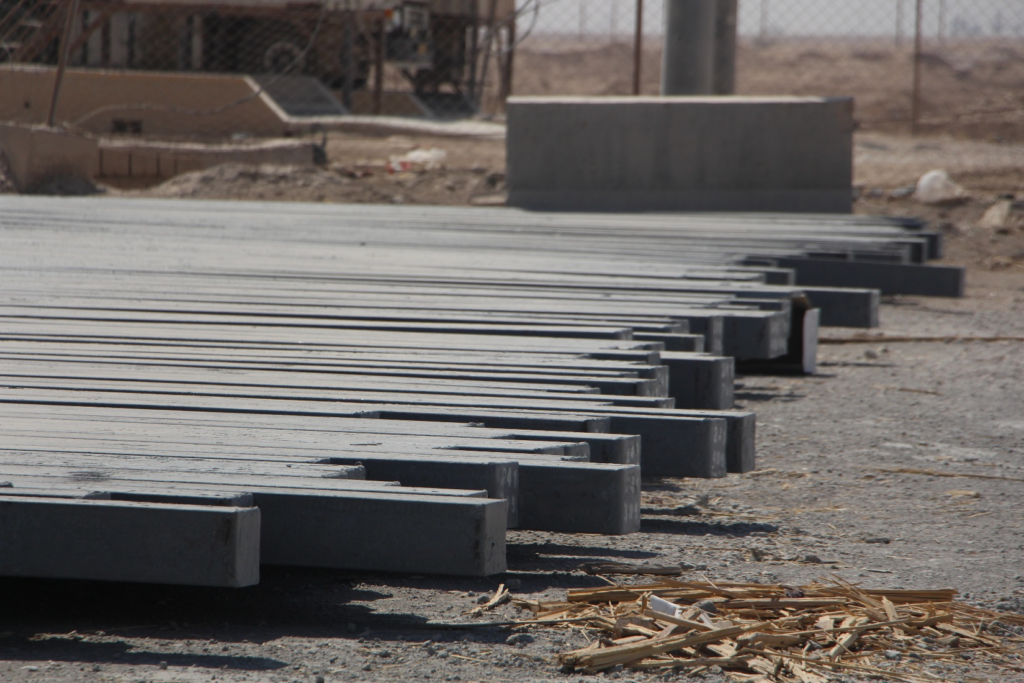
Billets possess distinct technical properties that determine their appropriateness for various industrial uses. Key factors include dimensions, chemical composition, mechanical properties, and surface quality—all of which are expected to align with international standards like ASTM, JIS, and EN. Typically produced with square or rectangular cross-sections, billets range in size from 40 mm to 150 mm. Their standard lengths generally fall between 6 and 12 meters, depending on production needs. The chemical makeup of billets varies based on the type of steel utilized, whether carbon steel, alloy steel, or stainless steel. Elements such as carbon, manganese, silicon, phosphorus, and sulfur significantly influence their mechanical characteristics, such as strength, hardness, and ductility. The required mechanical properties—such as tensile strength, yield strength, and elongation—differ according to the billet’s intended purpose. For instance, billets designed for rebar production prioritize high ductility and weldability, whereas those for structural applications emphasize strength and toughness. Surface quality is equally vital; billets must remain free from cracks, inclusions, and other surface defects that could compromise the final rolled product’s integrity. To ensure compliance with stringent specifications, billets undergo thorough testing processes, including chemical analysis, ultrasonic evaluation, and dimensional inspection. These quality control measures confirm that billets meet required standards before further processing into finished goods. By maintaining precise control over their properties, billets deliver high performance, durability, and reliability across sectors such as construction, automotive, and manufacturing.
Applications of Steel Billet
Billets are a vital raw material in the steel industry, forming the backbone of numerous steel products. One of their primary uses is in the production of reinforcing bars (rebar), crucial for enhancing the strength and durability of concrete structures in construction projects such as buildings, bridges, and highways. Thanks to their high strength and resilience, billets are ideally suited for rebar manufacturing, ensuring the material can endure heavy loads and challenging environmental conditions. Another significant application of billets lies in the production of wire rods, which are further processed into various types of wires used across electrical, automotive, and industrial sectors. These wire rods are the basis for manufacturing products like cables, nails, fasteners, springs, and mesh reinforcement. Such items play an indispensable role in infrastructure development, mechanical engineering, and the creation of everyday consumer goods. Billets are also key in seamless pipe and tube production. Through heating and rolling processes, they are shaped into cylindrical forms. Seamless pipes made from billets are fundamental to industries like oil and gas transport, plumbing systems, and mechanical components. Their ability to withstand high pressure and extreme temperatures makes them a preferred choice in rigorous industrial applications. In automotive and machinery sectors, billets are transformed into essential components such as shafts, axles, gears, and crankshafts. Their exceptional mechanical properties—such as strength, toughness, and wear resistance—deliver reliability for vehicles and heavy machinery. Moreover, billets find use in the production of structural steel profiles such as angles, channels, and beams, which are extensively applied in construction and industrial frameworks. In summary, billets are an integral part of the steel supply chain, serving as the foundation for an array of products that underpin modern infrastructure, industrial functionality, and technological progress. Their versatility and adaptability ensure they remain a cornerstone material across numerous industries, sustaining demand in global markets. Click here to view Iron Bloom Ingot
Billets must adhere to rigorous standards and quality control protocols to guarantee their suitability for diverse industrial applications. These standards specify the chemical composition, mechanical properties, dimensions, and surface quality of billets, ensuring consistency and dependability in their performance. Widely recognized international standards for billet production include ASTM (American Society for Testing and Materials), EN (European Norms), JIS (Japanese Industrial Standards), and GOST (Russian Standards). The chemical composition of billets is meticulously regulated to include the appropriate proportions of elements like carbon, manganese, silicon, sulfur, and phosphorus. Mechanical properties such as tensile strength, yield strength, and elongation are also assessed to confirm they meet the required performance specifications for various uses. For example, billets intended for construction must possess high ductility and weldability, while those designed for machinery or automotive components demand superior strength and toughness. Quality control encompasses multiple testing and inspection methods to verify billet integrity before further processing into finished products. Techniques such as ultrasonic testing, magnetic particle inspection, and visual assessments are employed to identify internal or surface flaws like cracks, inclusions, or porosity. Dimensional evaluations confirm adherence to specified size and length requirements, while chemical composition analysis and hardness testing ensure compliance with industry benchmarks. By strictly adhering to these standards and quality control measures, billets deliver exceptional performance, reliability, and safety across a variety of industries. Upholding international specifications and rigorous inspection processes enables manufacturers to meet the demands of global markets while producing top-tier steel products for widespread use.
Advantages and Disadvantages of Billet
Billets play a vital role in the steel industry due to their numerous advantages, making them indispensable for various applications. One of their most notable benefits is their versatility, as they serve as the foundational material for producing a wide range of steel products, including rebar, wire rods, seamless pipes, and structural steel sections. This adaptability makes billets a cornerstone of industries such as construction, automotive, and manufacturing. Additionally, their inherent high strength and durability ensure that the resulting products can endure heavy loads, extreme temperatures, and harsh environmental conditions. Another significant advantage of billets is their excellent machinability and weldability, which facilitate their transformation into diverse shapes and sizes. Billets also allow manufacturers to adhere to stringent chemical composition and mechanical property standards, ensuring the consistent production of reliable, high-quality steel products. Moreover, modern production techniques like continuous casting have improved efficiency by reducing material waste and enhancing product uniformity. However, billets do come with certain drawbacks. One prominent challenge is the occurrence of surface defects, such as cracks, inclusions, and porosity, which can compromise the quality of the final steel products. Addressing these issues often requires additional inspections and surface treatments, leading to higher production costs. Another limitation lies in the high energy consumption associated with billet production, particularly in melting and casting processes. Furthermore, the cost of producing billets is influenced by the fluctuating prices of raw materials such as iron ore and scrap steel, adding an element of market volatility. In conclusion, billets remain a critical component of the steel industry, providing strength, adaptability, and efficiency. However, maintaining strict quality control and effectively managing costs are essential to reduce defects and optimize production processes. Click here to view Slab Ingot
Billet price
Numerous factors contribute to the pricing of billets, causing fluctuations influenced by both global and local market conditions. Among these, the cost of raw materials—such as iron ore, scrap steel, and direct reduced iron (DRI)—stands out as a primary determinant. Since billets are manufactured using these inputs, any variation in their prices directly impacts billet costs. Energy and production expenses also play a vital role. The production process, whether through electric arc furnaces (EAF) or blast furnaces, consumes significant amounts of electricity, natural gas, and other energy sources. Consequently, shifts in energy prices, such as fluctuations in oil and gas markets, can substantially alter production costs. Additional contributing factors include labor expenses, equipment maintenance, and transportation logistics—all of which influence the final price of billets. Supply and demand dynamics within the market are another major determinant. When sectors like construction, infrastructure development, and industrial manufacturing experience growth, the heightened demand for billets typically drives prices upward. On the other hand, economic slowdowns or reductions in steel production can curtail demand, leading to lower prices. Furthermore, trade policies, tariffs, and import-export regulations affect billet availability and pricing across regions. Currency exchange rates and geopolitical influences further complicate billet pricing, particularly in international trade. Steel products like billets are globally traded commodities, making their costs sensitive to currency fluctuations among major players such as the USD, EUR, and CNY. Changes in exchange rates can affect purchasing decisions and export competitiveness. In addition, factors such as political instability, economic sanctions, or trade restrictions can disrupt supply chains and result in price volatility. In summary, billet prices are shaped by a complex interplay of raw material costs, energy requirements, market demand trends, trade regulations, and global economic conditions. Understanding these variables is crucial for businesses and investors aiming to make well-informed decisions in purchasing or trading billets.
The market dynamics and demand for billets are shaped by a broad range of factors, including economic growth, industrial activity, and construction developments. Billets serve as a fundamental raw material in manufacturing various steel products such as rebar, wire rods, seamless pipes, and structural steel profiles. Consequently, their demand is intrinsically linked to the performance of key sectors like construction, automotive, infrastructure, and manufacturing. During periods of economic expansion, particularly in developing nations, billet demand typically rises due to heightened activity in construction and infrastructure projects. Urbanization, large-scale building initiatives, and increased industrial output often drive higher consumption of billets. In contrast, economic downturns or recessions tend to dampen demand as construction and industrial activities slow. Global trade dynamics and regional market demands are also critical factors influencing the billet industry. Export-import trends, including tariffs, trade agreements, and restrictions, play a pivotal role in determining billet availability and pricing across regions. Some areas may face supply shortages that push prices higher, while others might experience oversupply, leading to price drops. Nations with established steel production industries, such as China, India, and those within the EU, often exhibit robust domestic demand for billets. The health of the global steel market significantly affects billet demand. A strong appetite for finished steel products—driven by automotive manufacturing, machinery production, and infrastructure development—directly translates to higher billet consumption. Conversely, excess billet production or slowing steel demand can result in price declines and market imbalances. In summary, the billet market operates at the intersection of economic trends, industrial growth patterns, regional trade policies, and global steel demand. This interplay underscores its crucial role within the broader steel supply chain.

No Comment